
"Sale ends soon!" "Don't miss out!" "Limited time only!"
You've seen these lines a thousand times. So have your customers. And at this point, most of them scroll right past without a second thought.
Here's the thing: scarcity marketing isn't broken. It's one of the most powerful psychological triggers in ecommerce. But the way most brands use it? That's what's broken. Generic urgency slapped on every campaign trains your audience to ignore you.
The brands actually driving revenue with scarcity are doing something different. They're pairing real limits with real value, and they're using automation to deliver the right scarcity message at the right moment.
Here are a few highlights of what I'll cover:
- The psychological research behind why scarcity works (and why fake scarcity backfires)
- 10 specific tactics that ecommerce brands are using right now to convert more browsers into buyers
- Real examples from brands like Death Wish Coffee, Chubbies, and Poo~Pourri
In this guide, I'll walk you through the science, the strategy, and the exact scarcity marketing tactics you can put to work on your store today.
What You'll Learn
- What Is Scarcity Marketing?
- The Psychology Behind Scarcity: Why It Works
- 5 Types of Scarcity Marketing
- 10 Scarcity Marketing Tactics That Actually Drive Sales
- 1. The "Few Items Left" Alert
- 2. The Limited Introductory Price
- 3. The Limited Bonus Offer
- 4. The "Order by X Today" Shipping Tactic
- 5. The Limited-Edition Product Drop
- 6. The Device-Exclusive Sale
- 7. Back-in-Stock Alerts
- 8. Members-Only Early Access
- 9. The Social Proof and Scarcity Combo
- 10. The Countdown Timer Email
- Common Scarcity Marketing Mistakes to Avoid
- Wrapping Up
What Is Scarcity Marketing?
Scarcity marketing is a strategy that uses limited availability (of time, quantity, or access) to increase the perceived value of a product or offer and motivate faster purchasing decisions.
It works because people assign more value to things that are harder to get. When something feels like it might disappear, the urgency to act goes up.
In ecommerce, scarcity in marketing shows up everywhere:
- Flash sales with hard deadlines
- Low-stock alerts on product pages and in emails
- Exclusive access for VIP customers or app users
- Limited-edition products that won't be restocked
- Free shipping thresholds that expire at midnight
The common thread? A real constraint that gives the customer a reason to buy now instead of later. "Later" is where most ecommerce sales go to die.
But scarcity marketing for ecommerce only works when the limits are genuine. Fake countdowns and permanently "low" stock counts erode trust fast. I'll get into that later.
First, let's look at why scarcity is so effective in the first place.
The Psychology Behind Scarcity: Why It Works
Scarcity isn't just a marketing trick. It's rooted in decades of behavioral psychology research. Understanding the "why" helps you use it more effectively (and more ethically).
The Scarcity Principle
The scarcity principle, popularized by psychologist Robert Cialdini in his book Influence, states that people place higher value on things that are less available.
The classic study? The cookie jar experiment. Researchers gave participants identical cookies from two jars: one nearly full, one almost empty. Participants consistently rated the cookies from the near-empty jar as more desirable and more valuable.
Same cookie. Different perceived value. The only difference was availability.
The scarcity effect applies directly to ecommerce. A product with "412 in stock" feels ordinary. That same product with "Only 3 left" feels like something you need to grab before it's gone. The product hasn't changed. Your customer's perception of it has.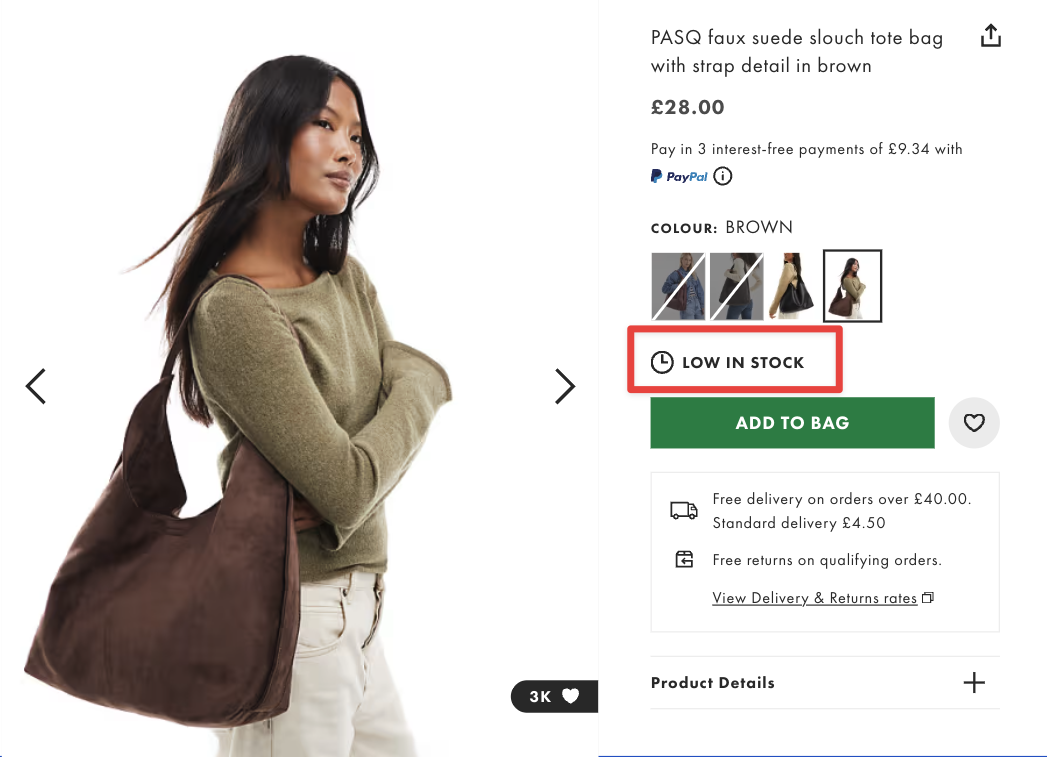
Psychological Reactance
Psychologist Jack Brehm's Theory of Psychological Reactance explains another layer of why scarcity works so well.
His research found that when people feel their freedom of choice is being threatened or restricted, their desire for the restricted option intensifies. In one famous study, toddlers who were told they couldn't play with a specific toy wanted that toy significantly more than before it was restricted.
Adults aren't so different.
When a product is about to sell out, or a deal is about to expire, your customer's brain registers a threat to their freedom of choice. "I might not be able to buy this." That perceived loss of options triggers a stronger desire to act.
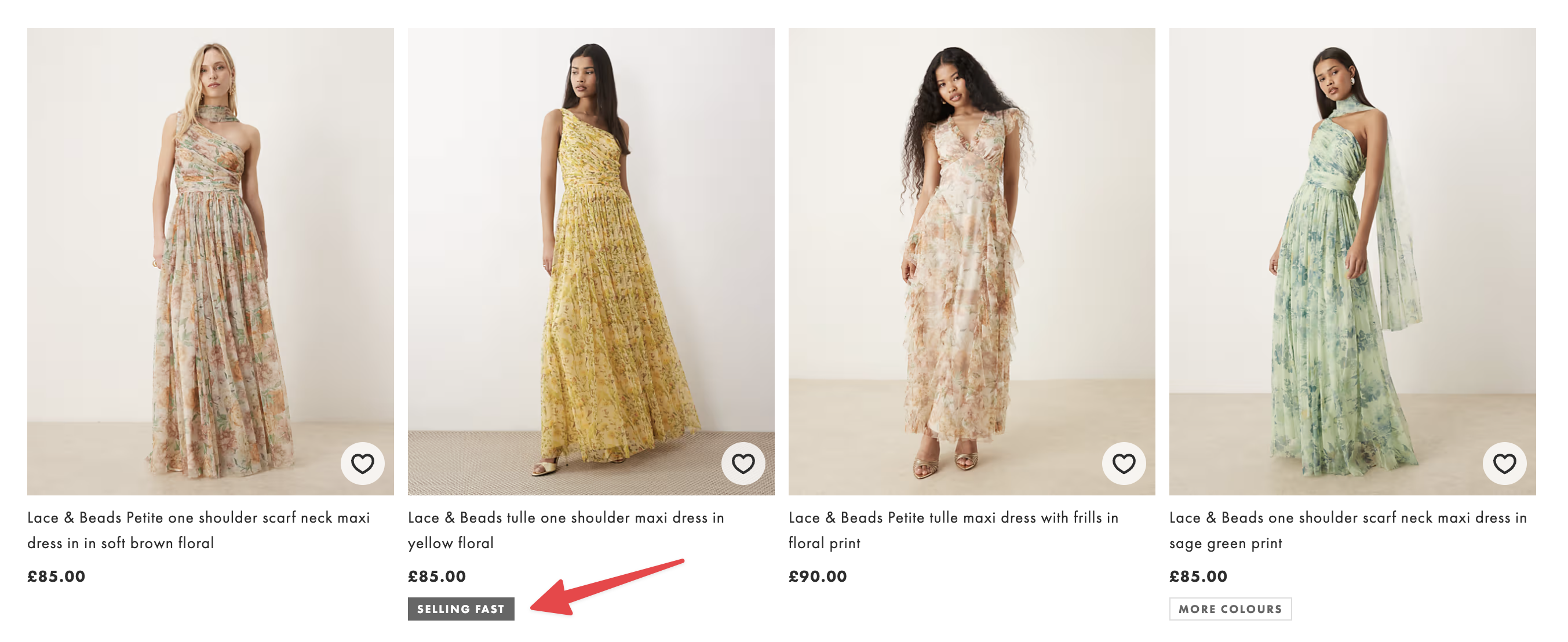
This is why "selling fast" messaging is so effective. It's not just about urgency. It's about preserving your ability to choose.
The Scarcity Bias and Loss Aversion
The scarcity bias is our cognitive tendency to overvalue things that are rare or diminishing in availability. It's a mental shortcut: "If it's scarce, it must be good."
This bias pairs powerfully with loss aversion, a concept from Daniel Kahneman and Amos Tversky's Prospect Theory. Their research showed that people feel the pain of losing something roughly twice as intensely as the pleasure of gaining something equivalent.
For ecommerce marketers, the implication is clear. Loss framing outperforms gain framing.
- Gain frame: "Save $20 on your order"
- Loss frame: "You'll lose your $20 discount at midnight"
Same discount. But the loss frame creates a stronger emotional pull because it activates scarcity bias and loss aversion simultaneously. Your customer isn't just missing a deal. They're losing something they already feel is theirs.
FOMO: The Emotional Engine
FOMO (fear of missing out) is the emotional layer that sits on top of all these psychological principles. It's what transforms a rational observation ("this product has limited stock") into an emotional response ("I need to buy this right now").
And it's not subtle. 60% of millennials make reactive purchases driven by FOMO, most within 24 hours of experiencing it.
Scarcity is the engine that makes FOMO real, not hypothetical. "Only 5 left in stock" isn't a vague feeling that you might be missing out. It's a concrete, verifiable reason to act.
That's what separates effective scarcity marketing from generic "don't miss out!" copy. The best FOMO marketing examples pair a specific, believable constraint with a clear reason to care.
5 Types of Scarcity Marketing
Not all scarcity looks the same. Understanding these five types gives you a playbook you can mix, match, and adapt to your brand's scarcity marketing strategy.
- Time-based scarcity limits when someone can buy. Flash sales, countdown timers, early-bird pricing, and shipping cutoffs all fall here. ("Order in the next 3 hours for next-day delivery.")
- Quantity-based scarcity limits how many are available. Low-stock alerts, limited production runs, and numbered editions create this pressure. ("Only 12 left in stock.")
- Access-based scarcity limits who can buy. VIP early access, members-only sales, and invitation-only launches make the offer feel exclusive. ("Early access for loyalty members only.")
- Bonus scarcity limits extra value rather than the product itself. Free gifts with purchase, limited-time free shipping, or bundled add-ons create urgency without discounting. ("Free engraving on orders placed this week.")
- Hybrid scarcity combines two or more types for compounding effect. ("Only 50 units available for the next 24 hours" blends quantity and time.) This is where urgency marketing gets its highest potency.
One critical note: the scarcity must be genuine. Resetting countdown timers, displaying static "only 2 left" badges, or running "final sale" events every week will destroy your credibility. Customers notice patterns. Once trust is gone, no amount of urgency tactics will bring them back.
For more on structuring time-sensitive promotions ethically, check out my guide to limited-time offers.
Now let's get into the specific tactics.
10 Scarcity Marketing Tactics That Actually Drive Sales
1. Use "Few Items Left" Alerts to Create Quantity Pressure
This is quantity-based scarcity at its simplest and most effective. Instead of vaguely suggesting an item is popular, you show the exact number remaining.
Specificity matters here. "Low stock" is easy to ignore. "Only 3 left" is not. Precise numbers feel real because they are real, and that authenticity is what triggers the scarcity effect.
Death Wish Coffee does this in their email marketing.
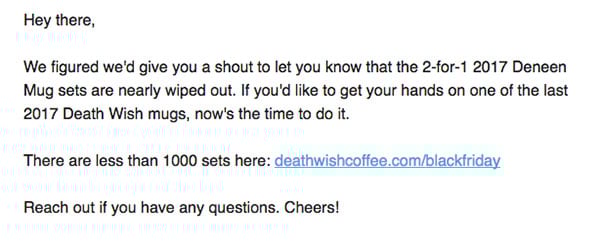
They let prospects know that the item is almost sold out. And if they want to get their hands on one, they should take action now.
They’ve also included the number of items left to ramp up the urgency.
Beardbrand takes this approach in their abandoned cart emails.
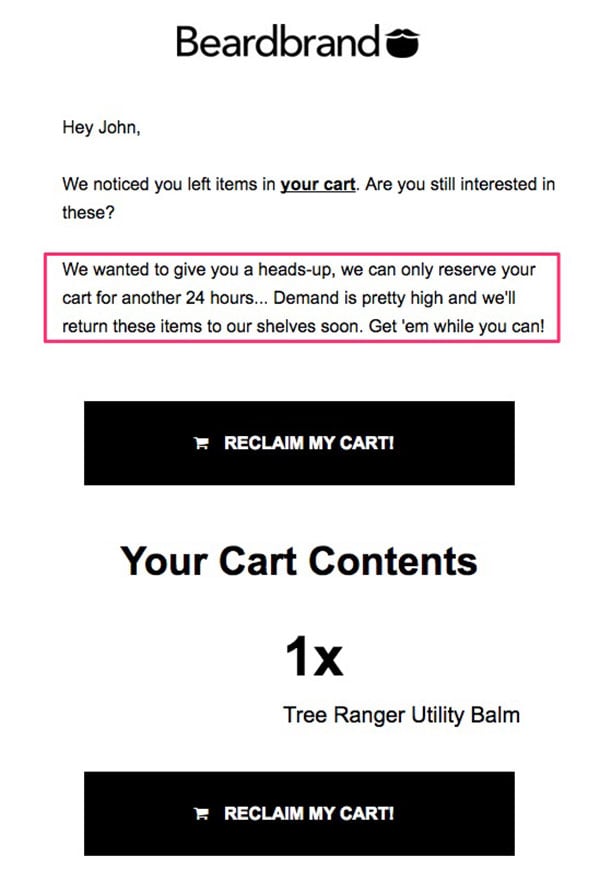
Instead of a generic "you left something behind" message, they include a low-stock warning for the specific items in the cart. It reframes the email from a reminder into a warning: "This thing you wanted might not be here tomorrow."
To set this up on your store:
- Enable real-time stock counts on product pages (most Shopify themes support this natively)
- Set a threshold for when the alert appears (showing "Only 247 left" isn't scarcity, but "Only 6 left" is)
- Mirror low-stock data in your abandoned cart emails for maximum impact
Test out triggering low-stock cart reminders dynamically. When a subscriber's cart contains an item that drops below your inventory threshold, the workflow sends a personalized nudge with the exact product and stock level.
2. Offer a Limited Introductory Price for New Products
Early-bird pricing is time-based scarcity applied to new product launches. You offer a lower price for a defined period, then raise it. The value proposition is clear: act early, pay less.
Author and marketing strategist Tim Grahl used this approach for his book launch.
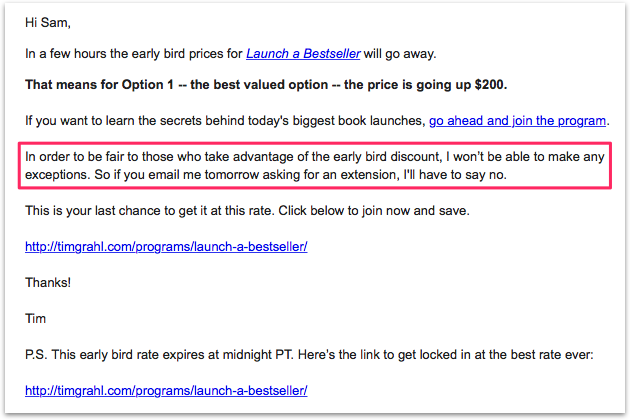
He offered a discounted pre-order price with a hard deadline, and clearly communicated what the post-launch price would be. The gap between the two prices was the incentive. The deadline was the trigger.
This tactic works especially well because it rewards your most engaged audience (the people who pay attention to launches) while creating a natural urgency that doesn't feel manipulative.
To make it work:
- Announce the introductory price and the deadline clearly (no vague "for a limited time")
- State the post-deadline price so customers can calculate what they'd lose by waiting
- Position it as a one-time launch offer, not a recurring discount
- Use loss framing in your emails: "Your $15 discount disappears Friday at midnight"
This approach also gives you a natural excuse to send multiple emails during the launch window. Each one can emphasize a different angle: the product itself, social proof from early buyers, and then the approaching deadline. For more on pricing psychology, check out our guide to ecommerce pricing strategies.
3. Add a Limited Bonus Offer Instead of Discounting
Not every brand wants to discount. If you sell premium or luxury products, slashing prices can actually hurt your positioning. Bonus scarcity gives you the urgency benefits of scarcity advertising without eroding your price integrity.
The idea: offer something extra (a free gift, bonus service, or exclusive add-on) for a limited time instead of cutting the price.
Poo~Pourri nails this. Rather than running percentage-off sales, they offer free bonus products with purchase for a limited window. The products themselves stay full price. The scarcity is attached to the bonus, not the core offer.
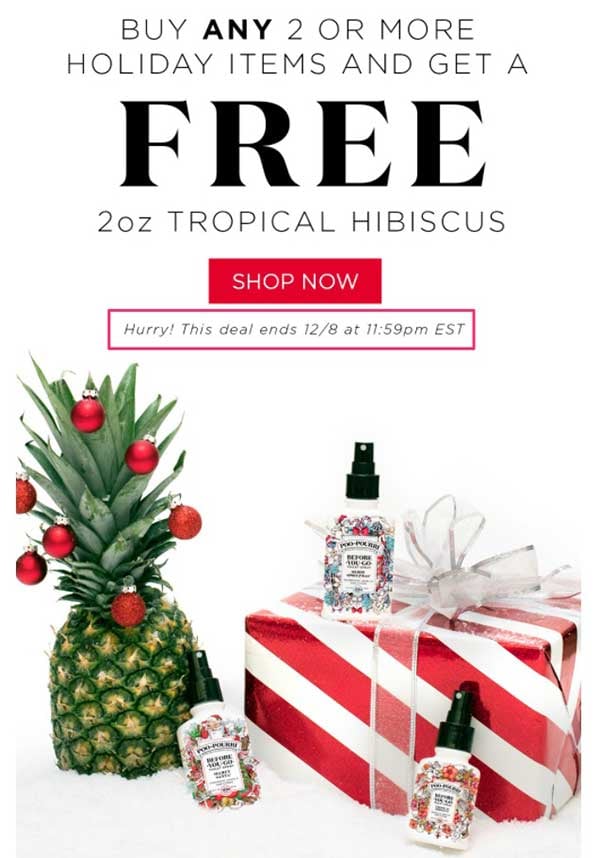
Notice how this preserves the brand's fun, premium feel while still giving customers a reason to buy now. The product's value isn't diminished. If anything, it's enhanced.
Bonus offer ideas that work well for ecommerce:
- Free sample pack of a new product line
- Complimentary gift wrapping or personalization
- Extended warranty or satisfaction guarantee
- Exclusive training guide, recipe book, or styling lookbook
- Free installation, setup, or onboarding session (for higher-ticket items)
The key is making the bonus genuinely desirable. A "free sticker" doesn't move the needle. A free full-size product from your upcoming collection does.
4. Use "Order by X Today" Shipping Cutoffs
Consumers today aren't just demanding, they're becoming more impatient.
If you can offer next-day delivery, you already have an edge over the competition. Add scarcity to that, and you can sell even faster.
Firebox does this well. By adding "order by 5 PM" to their emails, they give readers a clear deadline: act now if you want your items tomorrow.
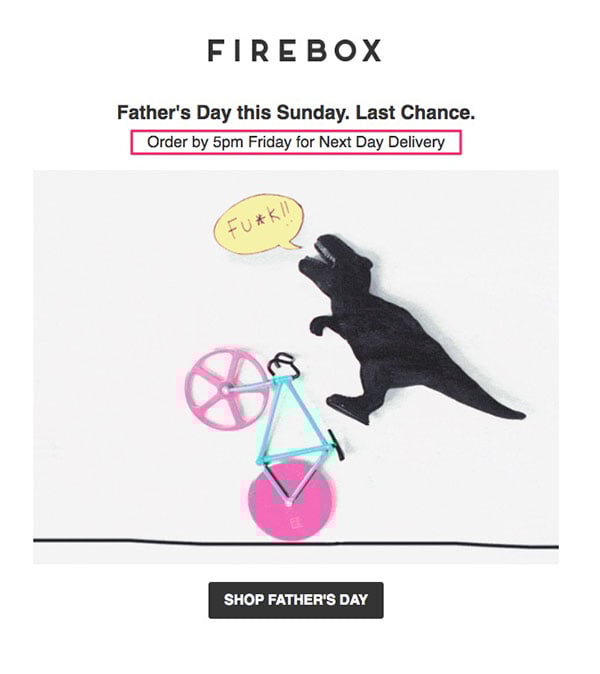
This tactic works because it combines urgency with a tangible reward.
The customer isn't avoiding missing a deal. They're getting their product faster. That's a genuine value exchange, not a pressure tactic.
It's especially effective during the holiday season when delivery timing is top of mind, but it works year-round for anyone buying gifts or time-sensitive items.
5. Create Limited-Edition Product Drops
Limited editions are quantity-based scarcity at the product level. Instead of limiting a promotion, you limit the product itself. Once it's gone, it's gone.
Chubbies, the casual wear brand, has turned limited-edition drops into a core part of their marketing engine. They release restricted production runs of specific designs, promote them heavily through email and social, and lean into the "when they're gone, they're gone" messaging.
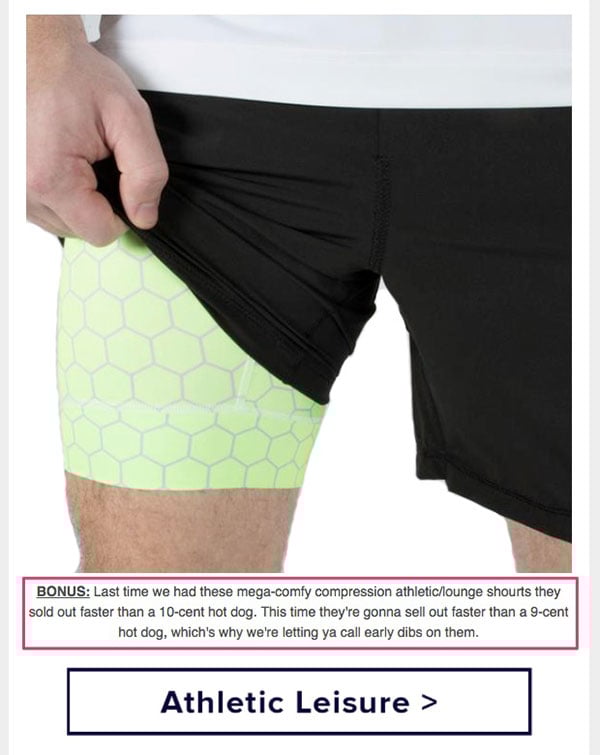
The scarcity here is baked into the product, not layered on as a marketing tactic. That makes it feel authentic, which is why limited-edition drops generate some of the highest engagement rates in ecommerce email marketing.
Two approaches work well here:
- Pre-order promotion: Announce the drop in advance with a specific quantity ("We're making 200 of these, and pre-orders open Tuesday at 9am"). This builds anticipation and lets you gauge demand.
- Back-in-stock notification: If a limited item sells out, capture emails on the product page and notify subscribers when (or if) it returns. The prior sellout becomes social proof for the next run.
Limited editions also give you evergreen content for your email calendar. Each drop is a natural campaign moment with built-in urgency.
6. Run a Device-Exclusive Sale
Access-based scarcity doesn't always mean VIP lists. Sometimes it means restricting where a deal is available.
Birchbox ran a mobile-app-exclusive sale, offering discounts available only to customers who shopped through their app. The deal wasn't available on desktop or mobile web. Only in the app.
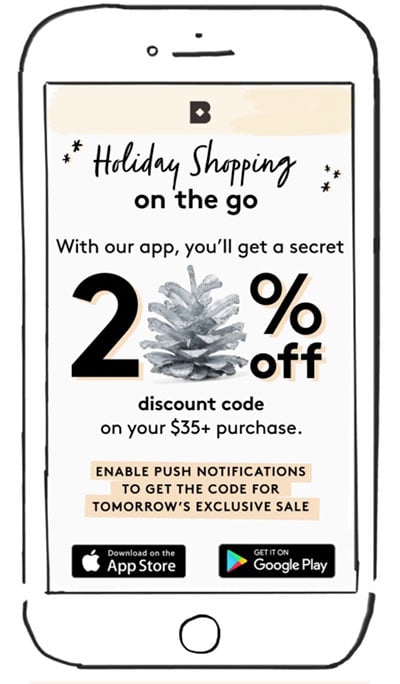
This is smart for two reasons. First, the exclusivity creates genuine access-based scarcity. Not everyone has the app, so the deal feels like a reward for those who do.
Second, it drives app adoption, which gives the brand a more direct, algorithm-free channel to their customers.
You don't need a dedicated app to use this tactic, either. You could run a mobile-web-only promotion using device targeting, or create a sale that's accessible only through a specific link shared in your email or SMS channel.
The principle is the same: restrict access to a specific platform, and the offer feels more exclusive. That exclusivity is what drives action.
7. Turn Sold-Out Pages into Back-in-Stock Alerts
Most ecommerce brands treat sold-out products as dead ends. The page says "Out of Stock" and the customer leaves. That's a missed opportunity.
Smart brands turn sold-out pages into lead capture moments. Instead of a dead end, the customer sees a field to enter their email for a restock notification. You get a high-intent subscriber. They get first access when the product returns.
The real power is what happens next. When you send that restock email, the prior sellout becomes your scarcity message. Lunya does this well with their back-in-stock campaign:
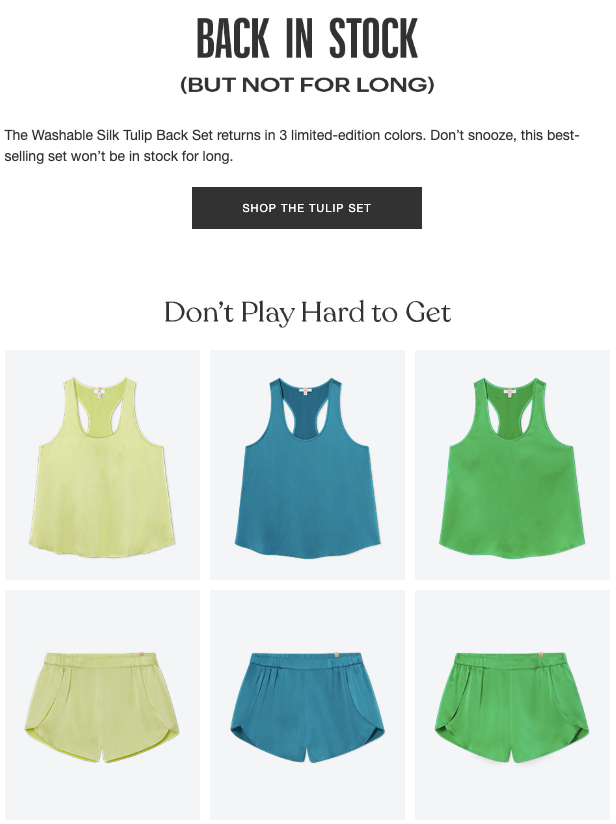
The message is clear: this sold out before, it's back in limited-edition colors, and if you don't act now, you'll be disappointed again. There's no need for a discount or free shipping. The prospect of missing out a second time is all the incentive the customer needs.
To set this up:
- Add an email capture form to all sold-out product pages
- Tag subscribers by the specific product they're waiting for
- When restocked, trigger an automated email that references the prior sellout speed
- Consider giving these subscribers a short head start (even 2-4 hours) before announcing the restock publicly
With Drip's workflow builder, you can automate this entire sequence. Tag subscribers when they sign up for a restock notification, then trigger a personalized email the moment the product is available again. No manual work required.
8. Give Loyal Customers Members-Only Early Access
Early access is access-based scarcity that rewards your best customers. They get first dibs on new launches or sales before the general public.
The scarcity here is implicit but powerful: the best sizes, colors, and quantities might sell out before public access begins. Your VIPs know this. It's why they open these emails.
One Kings Lane understands this well. They send their subscribers early access to Black Friday deals a full day before the sale goes public:
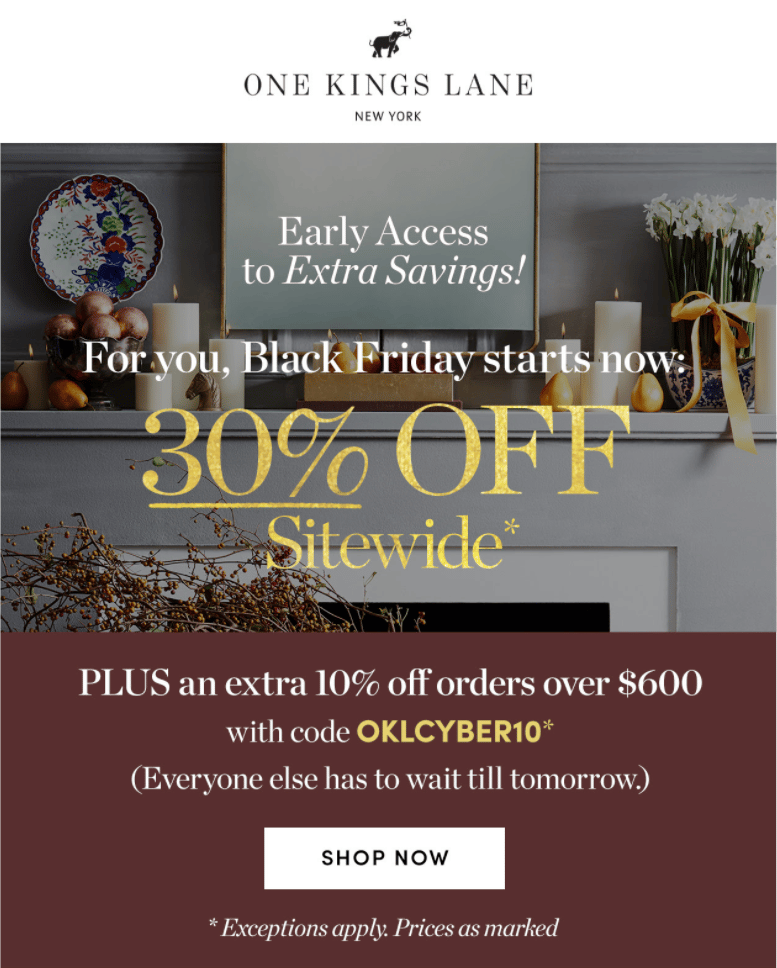
This tactic doubles as a retention tool. Customers who get early access feel valued. They feel like insiders. And that feeling of belonging keeps them engaged with your brand long-term.
To set this up effectively:
- Use dynamic segmentation to identify your VIP customers (repeat buyers, high LTV, high engagement)
- Send the early-access email 24-48 hours before the public launch
- Frame it as a reward: "You're getting first access because you're one of our best customers"
- After the early-access window closes, launch to your full list with "almost sold out" messaging for items that moved fast
9. Combine Social Proof with Scarcity Signals
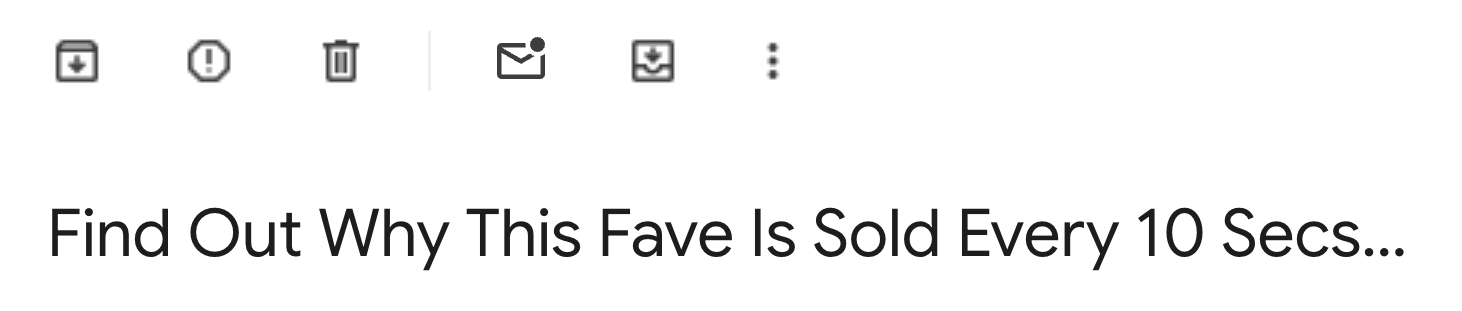
Low-stock alerts work. Popularity signals work. Together, they're even more effective.
Here's why: scarcity alone can feel arbitrary. "Only 4 left" raises a question: is that because the product is popular, or because you only made 4? Pairing a low-stock alert with a popularity signal answers that question: "Only 4 left (we sold 500 in the last 24 hours)."
Now the scarcity feels earned. It's low stock because everyone wants it. That combination triggers both the scarcity bias and social proof simultaneously.
You can apply this in several places:
- Product pages: "Only 6 left in stock" + "Over 1,200 sold this month"
- Email subject lines: "This sold out twice. It's back (for now)."
- Cart abandonment emails: "The item in your cart is one of our top sellers this week, and stock is running low"
The key is honesty. Only use real sales data and real stock numbers. Fabricated popularity signals are just as damaging as fabricated scarcity. For more scarcity marketing examples tailored to email campaigns, check out our guide to scarcity in email marketing.
10. Use Countdown Timer Emails for Hard Deadlines
A countdown timer transforms a vague "ending soon" into a concrete visual deadline. You can see the hours and minutes ticking away. It's harder to ignore than text alone.
But here's the mistake most brands make: they treat the countdown timer as the tactic. It's not. The timer is a delivery mechanism. What matters is what the timer is counting down to.
A countdown timer on a mediocre offer just highlights that your offer is mediocre. A countdown timer on a genuinely compelling, time-limited benefit creates real urgency.
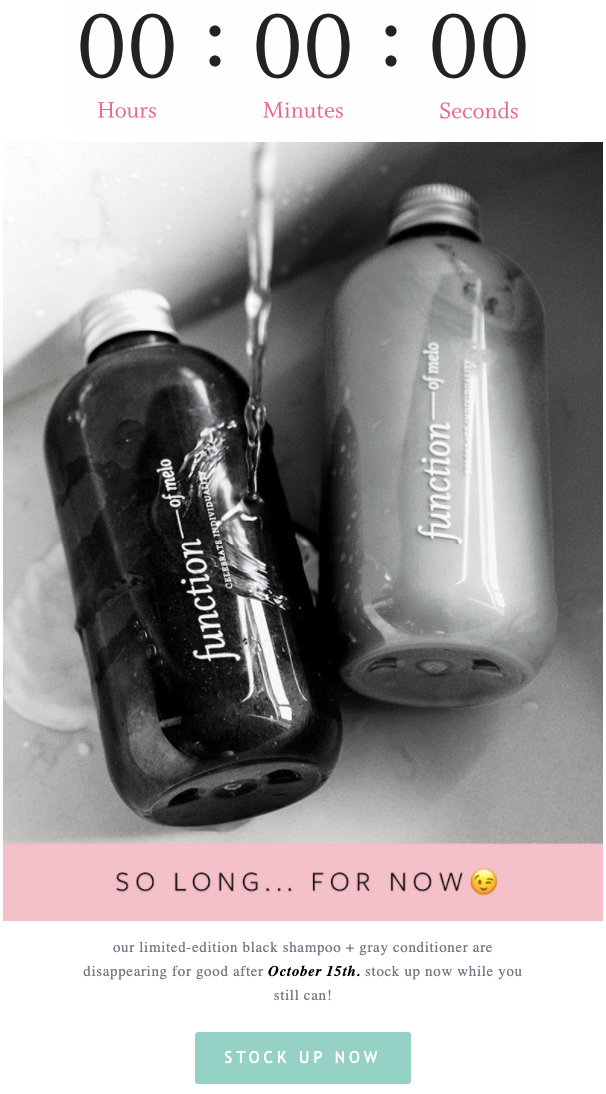
Effective countdown timer emails share three elements:
- A specific, desirable benefit: Not "sale ending" but "your free monogramming offer expires" or "early-bird pricing ends at midnight"
- A real deadline: The timer counts down to an actual cutoff, not a rolling "24 hours from open" illusion
- Clear stakes: What happens after the timer hits zero? "Price goes back to $89" or "This item returns to regular waitlist" gives the deadline teeth
When done right, countdown timers are one of the most effective scarcity advertising tools in email. They make time-based scarcity visceral instead of abstract.
Just don't overuse them. If every email you send has a ticking clock, none of them feel urgent. Save countdown timers for your genuinely time-sensitive offers: product launches, seasonal sales, and limited-bonus campaigns.
Common Scarcity Marketing Mistakes to Avoid
Scarcity marketing tactics are powerful. But they can backfire quickly if you're careless. Here are the four most common mistakes I see ecommerce brands make.
Fake scarcity. Countdown timers that reset when the page refreshes. "Only 2 left in stock" badges that never change. Customers aren't oblivious. When they spot fake scarcity (and they will), the trust damage extends far beyond that one campaign.
Overuse. If every email is "LAST CHANCE" and every product page screams "SELLING FAST," none of it registers. Scarcity works because it's the exception, not the rule. Reserve your strongest urgency messaging for your genuinely scarce offers, and let your other campaigns breathe.
Vagueness. "Won't last long" and "while supplies last" are weak because they give the customer nothing concrete to react to. Compare that with "Only 14 left" or "Offer ends Thursday at 11:59pm ET." Specificity is what makes scarcity believable, and believability is what drives action.
Brand mismatch. High-pressure scarcity tactics don't fit every brand. If you sell luxury goods or position yourself as calm and curated, aggressive countdown timers and "HURRY!" subject lines will feel off-brand. Match your scarcity approach to your brand personality. Access-based scarcity (exclusive launches, members-only access) often works better for premium brands than time-pressure tactics.
Wrapping Up
Those were 10 of my favorite scarcity marketing tactics for ecommerce, from low-stock alerts and limited-edition drops to members-only early access and social proof combos.
Pick one or two that match where your store is right now and build from there. A single well-executed back-in-stock workflow or genuine limited-bonus offer can move the needle more than five generic "sale ending!" emails.
The core principle is simple: real scarcity, clearly communicated, with genuine value behind it. That's what separates brands that drive revenue with urgency from brands that just add noise to the inbox.
Drip makes it easy to automate your scarcity marketing tactics: trigger low-stock cart reminders, build back-in-stock notification workflows, segment VIP customers for early-access campaigns, and deliver time-sensitive offers to the right people at the right moment.
Start your 14-day free trial today, no credit card required.