If you spend even half a day a week thinking about acquisition costs, you've already brushed up against customer lifetime value. You just may not have called it that.
Most ecommerce brands obsess over the wrong metric. Revenue, sessions, and conversion rate are all useful, but none of them tell you whether the customer you spent $40 acquiring will spend $50 or $500 with you.
That's the question customer lifetime value answers.
Here are 3 highlights of what I'll cover:
- The basic customer lifetime value formula (and the 4 inputs you need before you can use it)
- What a "good" CLV looks like across ecommerce verticals, plus the 3:1 LTV-to-CAC benchmark most healthy DTC brands hit
- 8 specific strategies for moving CLV up, including the win-back flow most stores forget to build
By the end, you'll know what your number is, whether it's healthy, and exactly which lever to pull next.
What You'll Learn
- What is customer lifetime value?
- Why CLV is the metric ecommerce can't ignore
- How to calculate customer lifetime value
- What's a good CLV?
- Know Your Customers Inside Out
- Win the Long Game on Retention
- Grow Each Customer's Value
- How to track CLV in your ecommerce stack
- Wrapping up
What is customer lifetime value?
Customer lifetime value (CLV) is the total revenue a business expects to earn from a single customer across the entire relationship. In its simplest form, the customer lifetime value formula is:
CLV = average order value × purchase frequency × customer lifespan.
It's the closest thing ecommerce has to a crystal ball. Higher CLV means you can afford to spend more on acquisition, give first-time buyers better welcome offers, and reinvest in retention without going broke.
You'll see CLV and LTV used interchangeably. They mean the same thing in this context. Some teams reserve "LTV" for subscription/SaaS economics and "CLV" for ecommerce, but plenty of people swap them freely.
I'll use CLV throughout this guide.
Why CLV is the metric ecommerce can't ignore
Revenue going up is nice. But revenue alone doesn't tell you whether your business is healthy or whether you're slowly bleeding money on every customer you acquire.
CLV does. Specifically, knowing your customer lifetime value helps you in three concrete ways.
Control acquisition costs
If you spend $40 acquiring a customer and that customer ends up spending $50 with you over their lifetime, you have a problem. You're profitable on paper, broke in practice.
Most healthy ecommerce brands aim for a 3:1 LTV-to-CAC ratio. Earn three dollars in lifetime customer value for every dollar spent acquiring them. Anything lower means you're working too hard for too little; anything higher (5:1, 10:1) usually means you're under-investing in growth.
You can't set that ratio without knowing your CLV. And you can't optimize your ad spend without setting that ratio.
Boost loyalty and retention
A low or flat CLV is almost always a retention story. Customers are buying once and disappearing.
That's a fixable problem, but only if you know it exists. Tracking CLV over time tells you whether your retention work is paying off.
If CLV climbs after you launch a loyalty program or a post-purchase flow, you've got proof the work matters.
Target the right customers
Your average CLV hides a story. Some customers spend $50; some spend $5,000. The traits that separate the two groups (acquisition channel, first product purchased, location, signup source) are the most valuable signal you have for ad targeting.
Once you know what your highest-CLV customers look like, you can go find more of them. And spend less time chasing customers who'll churn after one order.
How to calculate customer lifetime value
The basic formula isn't complicated. But you can't plug numbers in until you've calculated four underlying metrics.

Walk through them in order. Use real data from the last 12 months if you have it, or the longest period you can pull.
Step 1: Average order value
Pick your time period (we'll use one month for this example). Then divide total revenue by total number of orders.
AOV = Total revenue ÷ Number of orders
Say you earned $10,000 from 50 orders last month. Your AOV is $200.
Step 2: Average purchase frequency
Now figure out how often the typical customer buys. Divide total orders by total unique customers in the same period.
Average purchase frequency = Total orders ÷ Total customers
If 600 orders came from 400 unique customers in a year, your frequency is 1.5.
Step 3: Customer value
Multiply AOV by purchase frequency. That tells you what each customer is worth in the period you're measuring.
Customer value = AOV × Purchase frequency
Using our numbers: $200 × 1.5 = $300 per customer per year.
Step 4: Average customer lifespan
How many years does a typical customer keep buying from you? For most DTC brands the answer is 1 to 5 years, depending on the category.
Average customer lifespan = Sum of all customer lifespans ÷ Total customers
Let's say yours is 5 years. If you don't have enough history to calculate this, use 1 to 3 years as a conservative starting point and refine as you collect more data.
Step 5: Customer lifetime value
Plug customer value and lifespan into the formula.
CLV = Customer value × Average customer lifespan
$300 × 5 = $1,500. That's what you can expect each customer to spend with you over their relationship with your brand.
It's a number, not a destination. The point isn't to know your CLV. The point is to grow it.
Predictive CLV (the modern alternative)
The formula above is "historic" CLV. It works, but it averages everyone together.
If you've got enough order history (and most stores with 12+ months of data do), predictive CLV is more useful. It uses cohort modeling or machine learning to forecast what specific customers will spend, not just the average.
Tools that surface predictive CLV at the customer level let you spot future VIPs the day they buy for the first time, then pour your loyalty energy into them instead of running a generic everyone-gets-the-same-flow program. Start with historic CLV. Graduate to predictive once you've got the foundations in place.
What's a good CLV?
"Good" depends entirely on your vertical, your price point, and how long the typical customer relationship lasts. A coffee subscription has a wildly different CLV profile than a luxury watch brand.
Independent, non-platform benchmark data is sparse, so a single dollar figure that applies across DTC doesn't really exist. What you can use is the underlying pattern for your category:
- Apparel and fashion: low-frequency purchases, moderate AOV, short lifespans for fast fashion.
- Beauty and skincare: replenishment-driven, high frequency for routine products.
- Home goods and furniture: big-ticket, infrequent, long lifespans.
- Food and beverage (coffee, wine, snacks): subscription mechanics dramatically lift lifespan.
- Health, fitness, supplements: routine-based, replenishment heavy.
- Pet products: steady consumption, high emotional attachment.
For a single concrete benchmark, use the LTV-to-CAC ratio. 3:1 is the rule of thumb across DTC: earn three dollars in lifetime customer value for every dollar you spend acquiring the customer.
If you're below it, you're overspending on acquisition or under-delivering on retention. If you're well above it, you can probably afford to be more aggressive with paid growth.
Compare yourself to last quarter's number first, your industry second. The internal trend matters more than the external benchmark.
Know Your Customers Inside Out
You can't grow what you don't see. The first two strategies focus on turning your customer data into a map you can actually use.
1. Segment Your Audience by CLV Tier
Most stores treat their list as one big group. That's the fastest way to plateau on CLV.
Instead, split your customers into three to five tiers based on their current lifetime spend. A simple version: "Potentials" (haven't bought yet), "Casuals" (one order), "Core" (repeat buyers), "Champions" (top 10% by spend). Each tier needs a different conversation.

The CLV curve usually looks like the graph above. A small group at the low end, a small group at the high end, and a big profitable middle that's worth more than you think.
You can layer this. Segment by category interest first (e.g., "health nuts" vs. "culinary enthusiasts" for a food site), then by CLV tier within each. That's how you get from generic blasts to messages that actually feel personal.

With Drip, segments are dynamic. As a customer's order history changes, they move between tiers automatically. No CSV exports, no manual list maintenance.
2. Personalize Every Campaign with Behavioral Data
"Personalization" gets tossed around so much it's nearly lost its meaning. We're not talking about merge tags. We're talking about using what customers actually do (what they viewed, what they put in their cart, what they bought last month) to shape what they see next.
The Spring Copenhagen team, an interior design brand on Shopify, did exactly this. After rebuilding their welcome and post-purchase flows around behavioral data with Drip, they saw AOV climb 32.24% and click-through rates jump 96%.
Behavioral personalization doesn't require a data science team. It does require a platform that ingests browsing, cart, and purchase data and lets you trigger flows off of it without writing code.
Win the Long Game on Retention
Acquisition gets the budget and the credit. Retention quietly moves CLV more. These four strategies target the long tail of the customer relationship.
3. Master the Welcome Series
The welcome email is the most-opened email any customer will ever get from you. It sets the trajectory of the entire relationship.
Welcome emails consistently outperform mass sends on every engagement metric. Yet most ecommerce welcome flows we audit are a single email with a generic discount.
Build a three-email series instead. Email 1 delivers whatever you promised at signup (discount, lead magnet, guide). Email 2 brings the brand to life (reviews, testimonials, the story). Email 3 nudges the first purchase with best sellers or social proof.

Nifty Gifts ran exactly this kind of split welcome series with Drip and saw a 77% revenue increase in two months. The welcome series isn't optional. It's the first lever to pull.
4. Build a Retention Engine, Not Just an Acquisition Machine
Most ecommerce teams spend 80% of their effort on acquisition and 20% on retention. That math is backwards for any brand whose CLV is below where it should be.
Acquiring a new customer typically costs 5 to 7 times more than retaining an existing one. So why does the retention budget always lose?
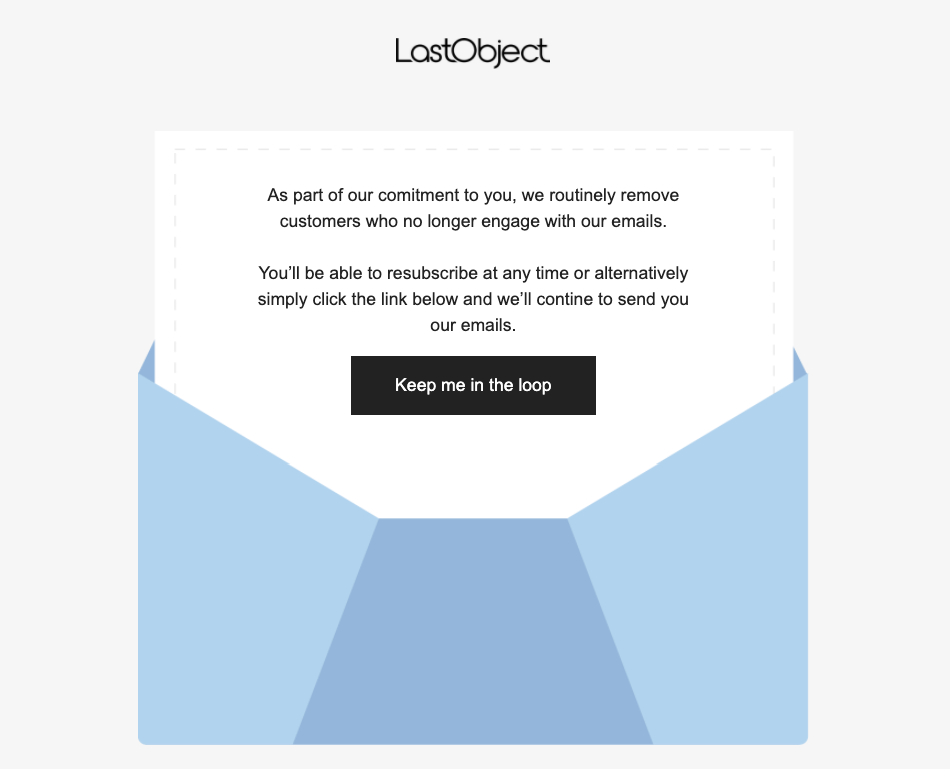
To rebalance, build always-on flows that touch existing customers in three places: a post-purchase nurture (thank you, what to expect, how to use), a replenishment or repurchase trigger (timed to the typical reorder cycle for your category), and a re-engagement series for customers who've gone quiet.
None of these are sexy. All of them compound.
5. Start a Loyalty (or VIP) Program
Loyalty programs work when they reward the behaviors you actually want: repeat purchases, higher AOV, advocacy.
According to McKinsey, the best-performing loyalty programs boost revenue from points-redeeming customers by 15 to 25% annually. That's a meaningful chunk of CLV without a single new ad dollar spent.
You don't need a full points system to start. A "VIP" tag, early access, free shipping over a threshold, and a thank-you reward at the 3rd and 10th order will get you most of the lift with a fraction of the complexity. Layer on tiers as you learn what your customers actually respond to.

6. Trigger Win-Back Automations Before Customers Churn
Most stores wait until a customer is already gone to try to win them back. By then, it's expensive.
The smarter play is to trigger an automation when a customer crosses a "going quiet" threshold (typically 90 or 180 days since last order, depending on category). Send your highest-value offer, then a "we miss you" message, then a final goodbye.
Customers who re-engage stay. Customers who don't help you protect deliverability by getting pruned. Either outcome is better than letting them sit on your list, undelivered.
With Drip's pre-built win-back template, you can spin up the entire series in an afternoon and tweak the timing per category from there.
Grow Each Customer's Value
The final two strategies focus on the second half of the CLV formula: customer value. Either you get them to buy more frequently, or you get them to spend more when they do.
7. Promote Post-Purchase Cross-Sells and Replenishment
The 24 hours after a purchase are the highest-engagement window you'll get. Order confirmation emails see open rates north of 60%, which is prime real estate for a cross-sell.
The simplest version: a sidebar of complementary products inside the confirmation email itself. The customer who just bought a coffee table sees a coffee table book. The customer who just bought a moisturizer sees a matching serum.

For consumables (skincare, supplements, coffee, pet food), layer a replenishment flow on top. Trigger an email 25 to 30 days after purchase that reminds the customer they're probably running low. Mythologie Candles uses similar timed flows and now generates 60 to 80% of their revenue from email, with a 35% repeat purchase rate.
8. Launch a Referral Program
Customers acquired through referrals tend to have higher CLVs than customers acquired through paid channels. They're warmer, they trust the brand faster, and they stick around longer.
The structure that works: reward both sides. The referrer gets a discount or credit, the referred customer gets a discount on their first order. Both incentives stay live for as long as the program runs.
Knowing your CLV makes the math obvious. If a customer is worth $300 to you, paying $20 to acquire a referred one is a steal.
How to track CLV in your ecommerce stack
You can't grow what you don't track. The right tool depends on where your business is.
For Shopify stores, the native customer report gives you basic average order value and repeat purchase rate out of the box. That's enough to calculate historic CLV by hand once a quarter. It's not enough to act on at the customer level.
For brands with more sophisticated needs, the marketing platform layer is where CLV becomes operational. Drip Insights surfaces lifetime spend, order count, and engagement at the individual customer level, then feeds those into dynamic segments you can target directly.
If a customer crosses $500 in lifetime spend, they automatically enter your VIP segment. If they go 90 days without an order, they automatically enter the win-back flow.
For brands with serious data muscle, custom modeling (cohort analysis in BigQuery, predictive LTV models, or an analytics tool that bolts on top of your warehouse) is where you go after you've squeezed all the value out of the platform-level reports.
Start with what your platform gives you for free. Graduate to platform-level CLV segments. Add custom modeling last.
Wrapping up
Customer lifetime value is the closest thing ecommerce has to a single number that tells you whether your business model is healthy.
You don't need to nail all eight strategies above on day one. Pick the one that hits the gap you actually have.
If your welcome flow is a single email, fix that this week. If your retention budget is zero, build a post-purchase nurture next month. CLV compounds with every fix.
The brands that win aren't the ones with the biggest acquisition budgets. They're the ones who turn each new customer into two, then three, then ten orders.
Drip's dynamic segmentation, behavioral triggers, and pre-built workflows make it straightforward to operationalize every strategy in this guide, from CLV-tier segmentation to win-back automations. Start your 14-day free trial today, no credit card required.